
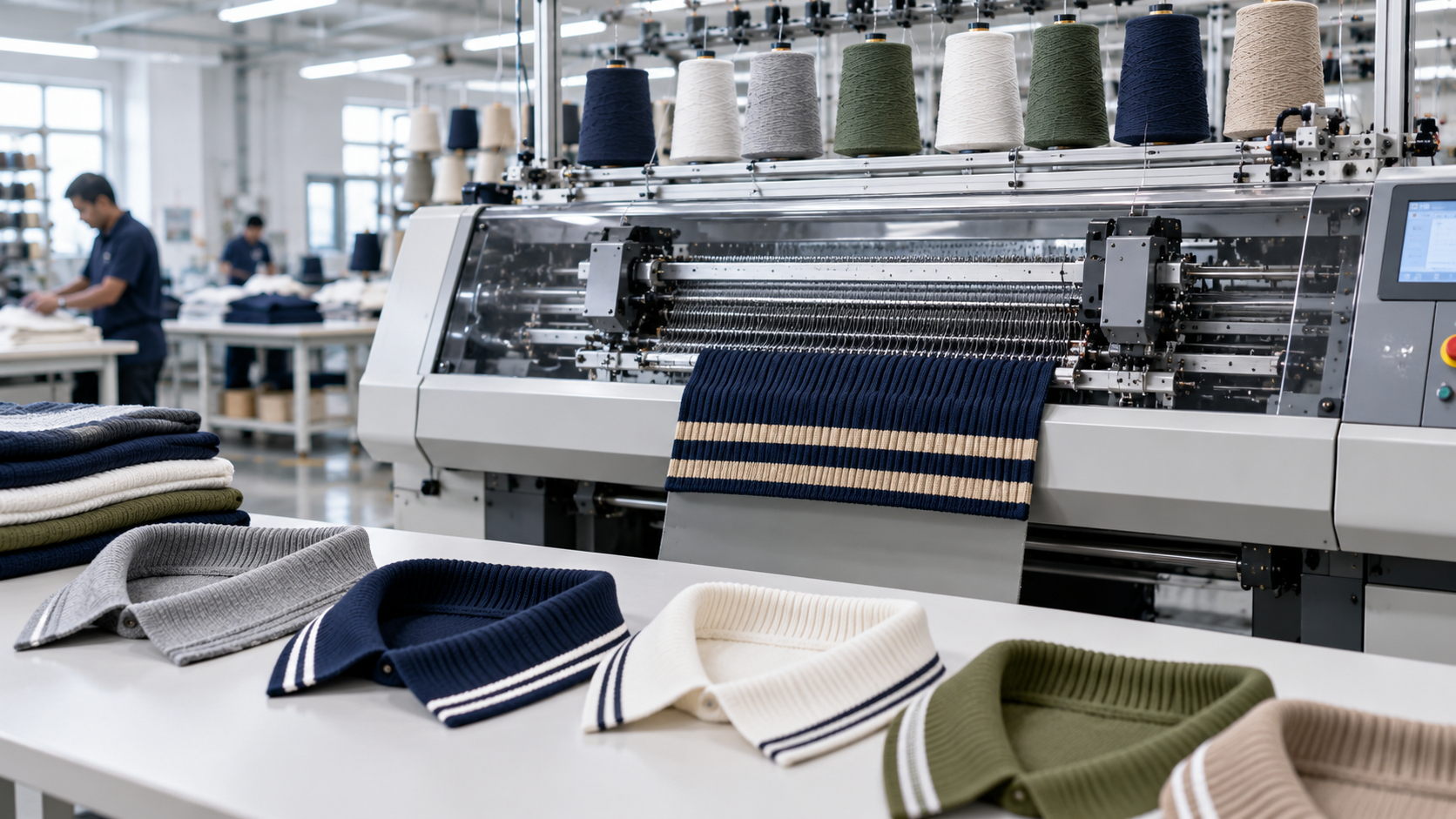
Understanding Rib Collar Manufacturers and Their Role in Knitwear
Rib Collar Manufacturers contribute to knitwear production by producing neckline components that need to match the garment’s fabric, measurements, and intended use. A properly made rib collar can support comfortable fitting, controlled stretch, shape recovery, and a clean finished appearance. Consistent knitting and accurate dimensions are especially important when the same specifications need to be repeated across multiple production batches.
When selecting a manufacturer, garment businesses should evaluate factors such as rib structure, yarn quality, dimensions, elasticity, recovery, thickness, color matching, finishing, and production consistency. Reviewing samples and confirming technical specifications before bulk production can help identify potential fitting or quality issues and support more reliable results in finished garments.
Understanding Quality Knitwear Component Production
SL Hosiery works with knitted garment components for businesses in the apparel and knitwear sector. Its production approach focuses on consistent knitting, suitable construction, accurate dimensions, material selection, customization, and quality inspection. For Rib Collar Manufacturers, these factors are important in delivering components that match the technical and visual requirements of different garments.
The company considers the intended garment application when working with production requirements, helping align the component with factors such as fit, stretch, recovery, thickness, color, and finishing. Clear specifications, sample evaluation, and consistent quality checks support dependable production and help manufacturers maintain uniform results across regular and bulk orders.
Why Rib Collar Manufacturers Need to Focus on Quality
The quality of a rib collar can directly affect neckline fit, comfort, appearance, and garment assembly. Rib Collar need to maintain accurate dimensions, suitable elasticity, consistent knitting, and proper shape recovery so that collars perform reliably during regular wear. Uniform stitch quality and clean finishing also help create a more polished appearance across individual garments.
Production consistency becomes especially important for manufacturers handling repeat or bulk orders. Using approved specifications and checking dimensions, stretch, recovery, color, and finishing at different production stages can help reduce variations between batches. Properly made collars can also support smoother attachment to garment panels, making them easier to incorporate into the overall production process.
Step-by-Step Production Process for Consistent Garment Components
A structured production process helps maintain consistency, accurate specifications, and reliable quality from the first sample through bulk production.
Step 1: Understand the Garment Requirement
Identify the garment type, neckline design, size, color, and intended application.
Step 2: Finalize Specifications
Confirm dimensions, rib structure, thickness, yarn, elasticity, recovery, and finishing requirements.
Step 3: Select Suitable Yarn
Choose yarn based on the required feel, appearance, stretch, durability, and knitting performance.
Step 4: Determine the Rib Structure
Select the rib construction according to the required elasticity, shape, thickness, and garment use.
Step 5: Prepare the Production Setup
Configure the knitting parameters according to the approved specifications to support consistent output.
Step 6: Produce a Sample
Make a sample to check the actual construction and identify any changes needed before bulk production.
Step 7: Verify the Sample
Check dimensions, rib structure, stitch consistency, stretch, recovery, thickness, color, and finishing.
Step 8: Begin Production
Start bulk manufacturing after the sample and specifications have been approved.
Step 9: Conduct Quality Checks
Inspect finished collars for dimensional accuracy, knitting consistency, color, elasticity, and finishing quality.
Step 10: Pack and Dispatch
Pack approved products properly to protect their shape and finish during handling and delivery.
Why Choose SL Hosiery Among Rib Collar Manufacturers
SL Hosiery follows a practical approach to rib collar production by considering the actual requirements of each garment rather than using the same specifications for every order. Product guidance can be based on measurements, rib construction, yarn characteristics, stretch, recovery, thickness, color, and finishing requirements. Attention to these technical details helps manufacturers select components that are suitable for their garment design and expected use. Sample verification can also provide an opportunity to review construction, dimensions, knitting consistency, and overall finish before moving to larger production quantities.
Clear communication of specifications is another important part of the production process. Customized requirements can be discussed according to garment application, order quantity, and required product characteristics, while quality checks help identify variations before dispatch. This combination of requirement-based guidance, consistent knitting practices, sample evaluation, and specification-focused production can help garment manufacturers maintain uniform results across repeat and bulk orders. The approach is designed to make sourcing decisions more practical and support dependable knitwear component production.
Benefits of Choosing a Reliable Manufacturing Partner
Working with experienced Rib Collar Manufacturers can help garment producers achieve better consistency in neckline components. Proper construction, suitable elasticity, accurate dimensions, and appropriate yarn selection can support a clean neckline finish, comfortable fitting, and better shape retention after repeated stretching. Consistent knitting and sizing also help maintain a uniform appearance across different garments and reduce avoidable fitting or assembly issues during production.
Quality-focused manufacturing also provides greater flexibility for different garment requirements. Components can be developed with different rib structures, sizes, colors, thicknesses, and material specifications according to the intended application. Clear technical requirements, sample verification, and quality checks before bulk production can further improve production compatibility and help manufacturers maintain reliable results across repeat orders .
Advantages and Considerations of Rib Collar Manufacturers
Rib collars can offer flexible neckline construction, controlled stretch, shape retention, and a clean garment finish when the construction and material are suited to the application. Different rib structures, dimensions, colors, and thicknesses can also provide flexibility for various knitwear designs. Consistent sizing and knitting quality are particularly useful for repeat and bulk production, where uniformity across multiple garments is an important quality requirement.
The final performance depends on selecting specifications that match the garment. Yarn characteristics, rib structure, dimensions, and elasticity should be reviewed carefully, as excessive stretch may affect shape retention while insufficient stretch can create fitting issues. For customized requirements, sample approval and color checking before bulk production can help verify the construction, appearance, and suitability before larger quantities are manufactured.
Rib Collar Manufacturers for Consistent Knitwear Quality
Choosing the right Rib Collar Manufacturers can make a noticeable difference in garment fit, comfort, appearance, and production consistency. Important factors include yarn quality, rib structure, accurate dimensions, elasticity, recovery, thickness, color matching, and finishing. Reviewing samples and checking these specifications before bulk production can help manufacturers identify potential issues and maintain uniform quality across different garment batches.
A dependable manufacturing partner should also have practical knowledge of garment requirements and production standards. Clear communication, customization support, sample approval, quality checks, and consistent manufacturing practices can make sourcing more reliable. Evaluating these factors together helps garment manufacturers select suitable components, reduce production variations, and achieve a better-finished product.