
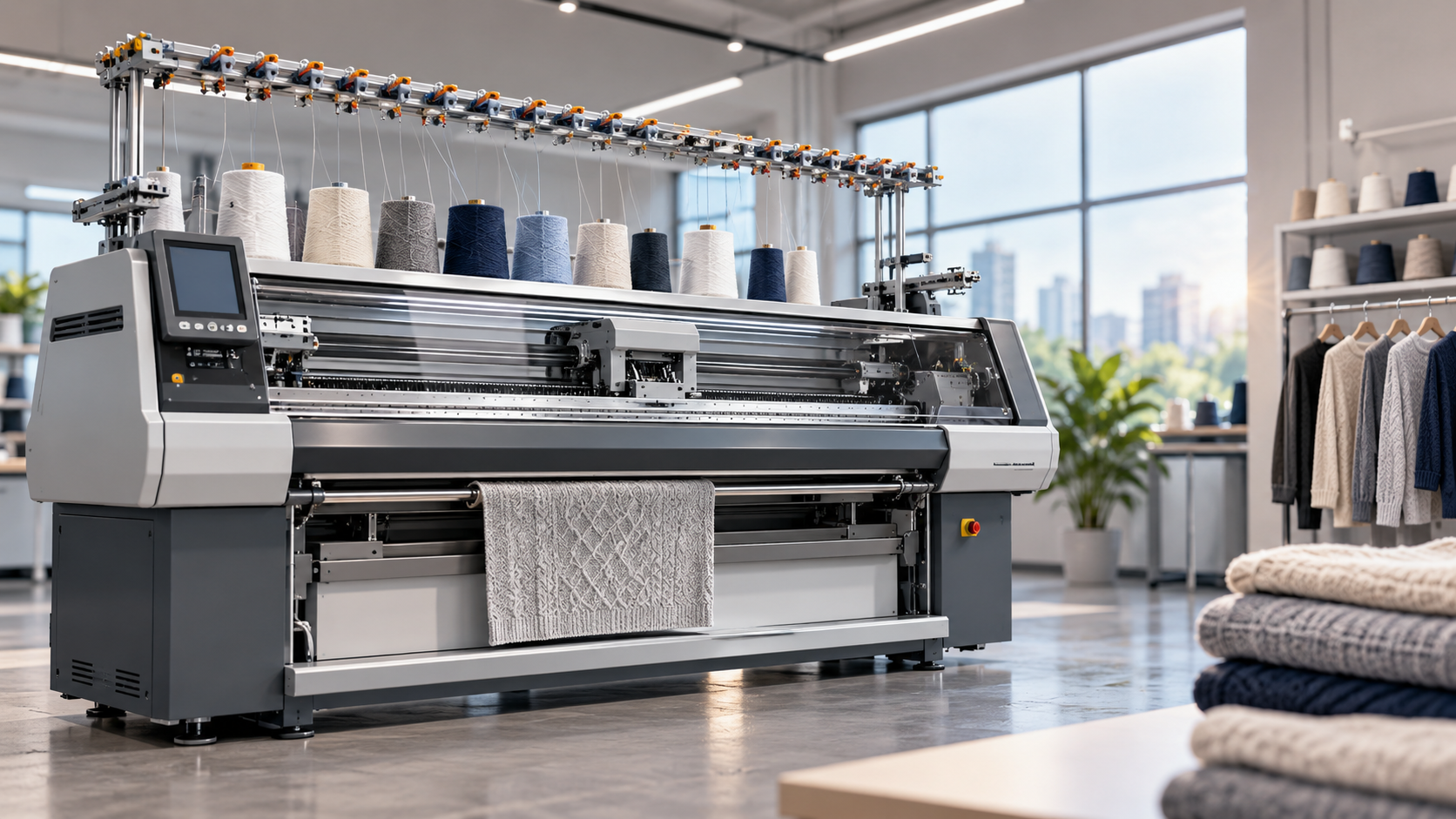
Flat Bed Knitting Machine for Modern Knitwear Manufacturing
A Flat Bed Knitting Machine is designed for controlled stitch formation and is widely used in the production of knitted fabrics, garment panels, collars, cuffs, and other textile components. Its flat needle-bed arrangement allows manufacturers to work with different stitch patterns, structures, widths, and designs based on the machine setup. Factors such as needle configuration, gauge, knitting accuracy, yarn handling, and programming can influence the quality and consistency of the finished knitted product.
Selecting suitable knitting equipment requires a practical assessment of the production process and the type of garments or components being manufactured. Manufacturers should evaluate knitting width, gauge, compatible yarns, pattern complexity, automation features, production capacity, programming requirements, maintenance needs, spare-parts availability, and technical support. Matching these factors with actual production requirements can improve operational efficiency, reduce avoidable machine-related issues, and support consistent output over regular manufacturing cycles .
Understanding the Equipment and Its Applications
SL Hosiery works with knitting machinery and production-focused solutions for businesses involved in knitwear and textile manufacturing. The focus is on understanding practical equipment requirements such as machine gauge, knitting width, yarn compatibility, stitch structure, pattern capabilities, production volume, and operating requirements. A Flat Bed Knitting Machine can support the production of different knitted fabrics and garment components when its specifications are properly matched with the intended application.
Machine selection also requires attention to programming, operating efficiency, maintenance, spare-parts availability, technical support, and long-term usability. Considering these factors before investment can help manufacturers choose equipment that fits their production process and reduces avoidable operational challenges. SL Hosiery emphasizes specification-based guidance and practical machine considerations to support consistent knitting performance and more informed equipment decisions.
Why Flat Bed Knitting Machine Technology Matters
Flat bed knitting technology provides manufacturers with greater control over stitch formation, fabric structure, pattern development, and product dimensions. Proper needle movement and machine settings can help maintain uniform stitches and consistent construction throughout production. Depending on the machine configuration, manufacturers can produce different knitted structures and design patterns while adjusting parameters to suit specific garment or textile component requirements. Accurate setup is important because factors such as gauge, yarn characteristics, knitting speed, tension, and programmed instructions can influence the final output.
Repeatable production is another practical advantage when the machine is correctly configured and the required settings have been verified. Once a suitable combination of machine parameters, yarn, stitch structure, and dimensions has been established, the same specifications can be applied to subsequent production runs. This can help reduce variations between pieces and support more consistent manufacturing. Regular machine maintenance, operator knowledge, setting verification, and quality inspection remain important for maintaining reliable performance over continuous production cycles.
How the Knitting Process Works Step by Step
Define the Product
Identify whether the requirement is for a garment panel, collar, cuff, fabric section, or another knitted component. Confirm the intended application before setting production parameters.
Confirm Product Specifications
Finalize dimensions, gauge, knitting structure, yarn, color, pattern, and required quantity. Clear specifications help reduce variations during production.
Select Suitable Yarn
Choose yarn based on machine compatibility, fibre characteristics, thickness, elasticity, appearance, and the required knitted structure. Yarn selection can directly influence stitch quality and finished-product performance.
Prepare the Machine
Inspect the machine, needles, yarn path, feeders, and relevant components before starting. Correct preparation helps support smooth operation and consistent stitch formation.
Configure the Pattern
Set the required knitting structure, pattern, dimensions, and production parameters according to the equipment capabilities. A Flat Bed Knitting Machine should be configured according to the approved product specifications.
Develop a Sample
Produce a trial piece before beginning bulk manufacturing. The sample provides a practical opportunity to verify dimensions, construction, stitch formation, and overall appearance.
Inspect the Sample
Check the sample for measurements, stitch consistency, tension, yarn behaviour, pattern accuracy, color, and finishing. Any deviation should be identified before production moves forward.
Fine-Tune Machine Settings
Adjust relevant settings if the sample does not meet the approved requirements. Changes may involve tension, stitch parameters, speed, pattern settings, or other machine controls.
Start Bulk Production
Begin production after the sample and specifications have been approved. Maintaining the verified settings helps improve consistency between individual pieces.
Monitor Production Quality
Inspect output at regular intervals for dimensional changes, stitch irregularities, pattern errors, yarn issues, or other variations. Early detection helps prevent larger batches of defective products.
Maintain the Equipment
Follow the manufacturer's maintenance requirements for cleaning, inspection, lubrication, and servicing where applicable. Proper maintenance supports reliable operation and helps reduce avoidable production interruptions.
Benefits of a Flat Bed Knitting Machine for Modern Production
A Flat Bed Knitting Machine can give manufacturers greater control over stitch formation, product dimensions, patterns, and knitted structures. Depending on the machine configuration, it can support different garment components and customized designs while allowing production settings to be adjusted for specific requirements. Consistent machine parameters can also help improve repeatability between production pieces, while computerized pattern controls can make it easier to reproduce approved designs with fewer manual adjustments.
The practical benefits also depend on selecting equipment that matches the intended production work. Machines with suitable gauge, knitting width, yarn compatibility, automation features, and pattern capabilities can support different product requirements and reduce repetitive manual operations. Proper machine setup, operator knowledge, regular inspection, and scheduled maintenance remain important for maintaining knitting accuracy and reliable output during continuous or customized production.
Key Advantages and Important Considerations
A Flat Bed Knitting Machine offers practical advantages for manufacturers that need controlled stitch formation, flexible designs, and repeatable production. Depending on the machine configuration, it can be used for different knitted components and support sampling, customized products, and regular production. Computerized models can provide programmable pattern options, helping reproduce approved designs with greater consistency and reducing some repetitive manual operations.
Equipment selection should be based on the actual production requirement rather than features alone. Manufacturers should evaluate yarn compatibility, machine gauge, knitting width, programming capabilities, operator training, maintenance requirements, production capacity, and initial investment. Considering both operating needs and long-term support can help improve equipment utilization, reduce avoidable production issues, and maintain reliable knitting performance.
Flat Bed Knitting Machine for Consistent Production
A Flat Bed Knitting Machine can support the production of knitted fabrics, garment panels, collars, cuffs, and other textile components with controlled stitch formation and repeatable results. Its practical value depends on matching the machine's technical capabilities with the product requirements, including knitting structure, dimensions, design complexity, and expected production volume. Sample development and testing can also help verify whether the selected settings and equipment are suitable before larger-scale production.
A well-informed equipment decision should consider more than the initial purchase cost. Gauge, knitting width, yarn compatibility, pattern capabilities, automation, programming, operator training, maintenance, spare-parts availability, and technical support can all affect long-term performance. Evaluating these factors against actual manufacturing requirements can help reduce operational issues, improve production consistency, and achieve better value from the equipment.