
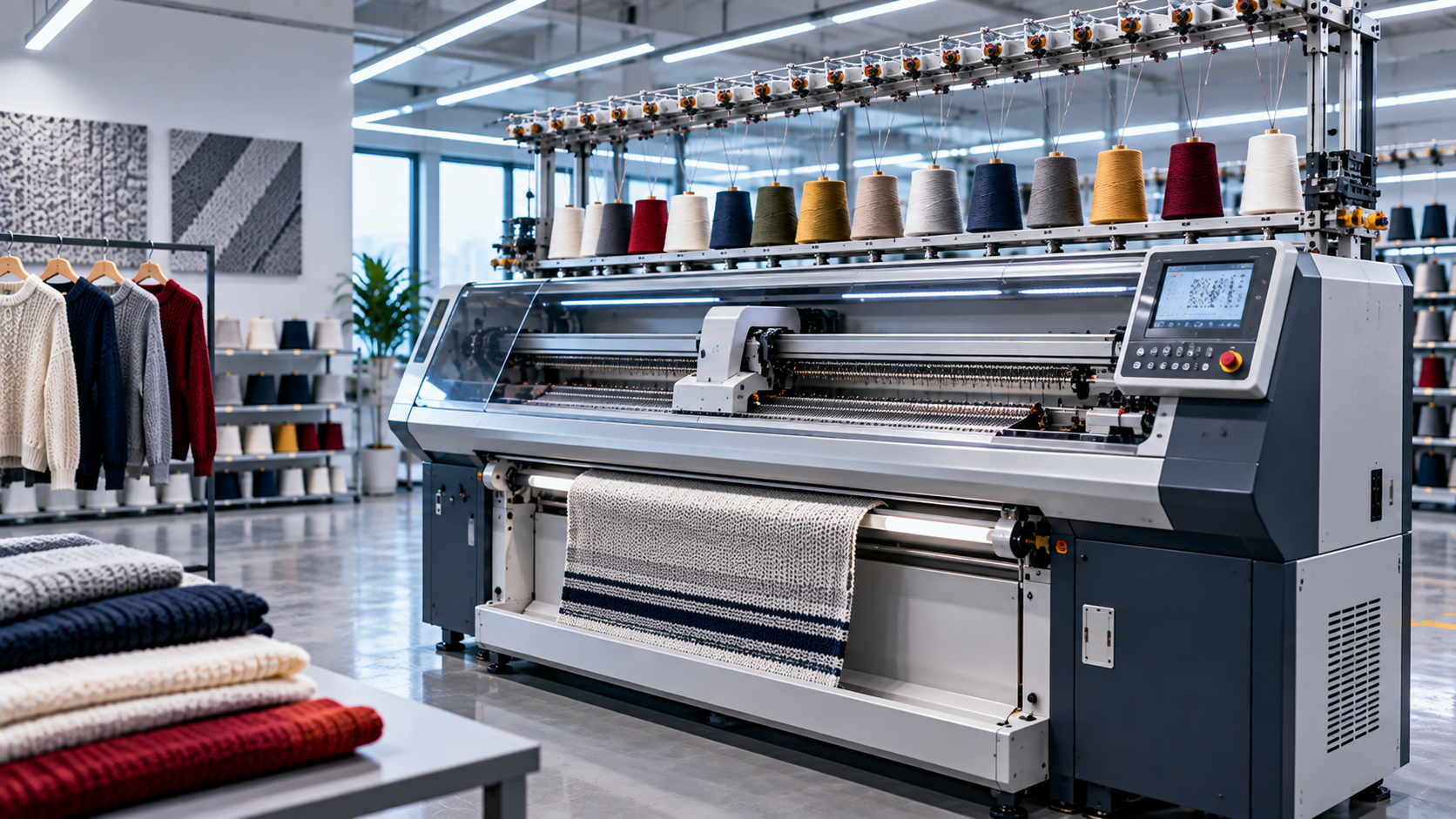
Computerized Knitting Machine for Modern Textile Production
A Computerized Flat Knitting Machine supports accurate and repeatable knitting by allowing manufacturers to control stitch formation, patterns, dimensions, and other production settings electronically. Its applications can include knitted fabric panels, collars, cuffs, garment components, and customized knitwear. Proper machine operation and programming can help maintain consistent output while reducing repetitive manual adjustments during production.
Choosing suitable knitting equipment requires practical evaluation of the manufacturer’s production needs. Factors such as yarn type, fabric structure, knitting width, production volume, programming capabilities, operator skills, maintenance requirements, and technical support should be considered before investment. Reliable machinery combined with proper setup, trained operators, and regular maintenance can contribute to stable production and better long-term machine performance.
Understanding How Computerized Flat Knitting Machine Work
A computerized flat knitting system uses electronic controls and programmed instructions to manage stitch patterns, dimensions, and other knitting parameters with greater consistency. Depending on the machine configuration, it can be used for sweaters, pullovers, collars, cuffs, ribbed components, garment panels, fashion knitwear, and decorative patterns. Proper programming and machine setup help manufacturers maintain repeatable results across production runs.
A Computerized Flat Knitting Machine Manufacturer understands that machine selection should match the intended fabric, yarn, production volume, knitting width, and pattern requirements. Practical factors such as programming flexibility, operator training, maintenance, machine reliability, and technical support should also be considered to ensure the equipment performs effectively in the actual production environment.
Understanding the Technology Behind Flat Knitting Machines
Modern knitwear production involves different designs, stitch structures, sizes, and order quantities, making consistent machine control important. A Computerized Flat Knitting Machine allows operators to manage programmed patterns, stitch formation, and production settings with greater precision. This can simplify design changes, reduce repetitive manual adjustments, and support more consistent results across production runs.
A Computerized Flat Knitting Machine Supplier can help manufacturers evaluate equipment according to their fabric requirements, production volume, yarn compatibility, pattern complexity, and operational needs. Proper machine selection, operator training, regular maintenance, and suitable technical support can improve production flexibility and help maintain reliable performance over time .
Computerized Flat Knitting Machine Manufacturing and Production Expertise
A Flat Knitting Machine Manufacturer needs practical knowledge of how machine configuration, yarn characteristics, knitting structure, and product specifications affect the final output. Flat knitting equipment is commonly used for producing knitted panels and components where accurate dimensions, suitable stitch structures, and repeatable production are important. Selecting the right machine requires consideration of fabric type, product size, yarn properties, production volume, pattern complexity, gauge, and the required level of automation.
A Computerized Power Flat Knitting Machine can provide greater control over programmed knitting operations, making it suitable for production requirements involving different patterns, sizes, and fabric structures. Manufacturers should evaluate machine capabilities against their actual workload, including yarn compatibility, knitting gauge, production speed, programming flexibility, operator requirements, maintenance, and technical support. This helps ensure the equipment is practical for long-term production use.
Why Modern Knitting Machinery Is Valuable for Manufacturers
A Computerized Flat Bed Knitting Machine can help manufacturers achieve better repeatability, flexible production, and smoother control over knitting operations. Programmable settings reduce repetitive manual adjustments and make it easier to reproduce patterns and production specifications across multiple orders. This can also help improve machine utilization and maintain a more organized production workflow.
A Computerized Knitting Machine can provide manufacturers with greater control over knitting parameters, pattern settings, and production processes. When properly selected, configured, and maintained, the machinery can support consistent fabric quality, reduce production variations, and improve operational efficiency while allowing manufacturers to handle different knitting requirements more effectively.
Step-by-Step Computerized Flat Knitting Machine Production Process
A structured production process helps manufacturers maintain consistent quality, reduce avoidable errors, and achieve better control over knitting operations. Each stage should be reviewed according to the product specifications, yarn characteristics, machine capabilities, and required production quantity.
Define the Product Requirement
Identify the garment or knitted component, required dimensions, stitch structure, design, gauge, and finishing expectations before production begins.
Select Suitable Yarn
Choose yarn based on fabric requirements, thickness, stretch, texture, and machine compatibility to support consistent knitting performance.
Prepare the Knitting Program
Create or select the digital pattern and configure the required stitch structures, dimensions, and production instructions.
Set Machine Parameters
Adjust knitting width, stitch-related settings, tension, speed, and other controls according to the selected program and yarn.
Conduct a Sample Run
Produce a trial piece before larger production. A Computerized Flat Bed Knitting Machine can help operators reproduce programmed settings while checking pattern accuracy, dimensions, tension, and stitch formation.
Inspect the Output
Examine the sample for measurements, appearance, stitch consistency, pattern accuracy, and other quality requirements. Necessary adjustments should be completed before regular production starts.
Who Can Benefit From Advanced Knitting Technology
A Computerized Flat Knitting Machine can support businesses that require consistent knitted products, flexible pattern production, and better control over different designs. Knitwear manufacturers, sweater production units, garment manufacturers, fashion apparel producers, and textile businesses can use this technology for regular production as well as customized requirements .
The technology can also be useful for custom knitwear manufacturers, sampling units, and product development teams working with multiple designs or frequent changes. Its programmable controls can help manage different patterns, sizes, and stitch structures while reducing repetitive manual adjustments. Suitability ultimately depends on production volume, yarn type, product requirements, machine capabilities, and operator expertise.
Choosing the Right Computerized Flat Knitting Machine
A Computerized Flat Knitting Machine can help manufacturers achieve better control over knitting patterns, stitch structures, production consistency, and design variations. The right equipment should be selected according to the actual fabric, yarn characteristics, knitting gauge, production volume, pattern requirements, operator skills, and maintenance needs. Proper programming, machine setup, and regular servicing also play an important role in achieving reliable production results.
When comparing a Computerized Flat Knitting Machine Manufacturer, supplier, or other Flat Knitting Machine Manufacturer, manufacturers should look beyond the initial machine cost. Technical capabilities, machine reliability, programming flexibility, spare-parts availability, operator support, maintenance assistance, and long-term service should all be considered. A well-matched machine supported by dependable technical guidance can contribute to smoother operations and more consistent knitwear production.