
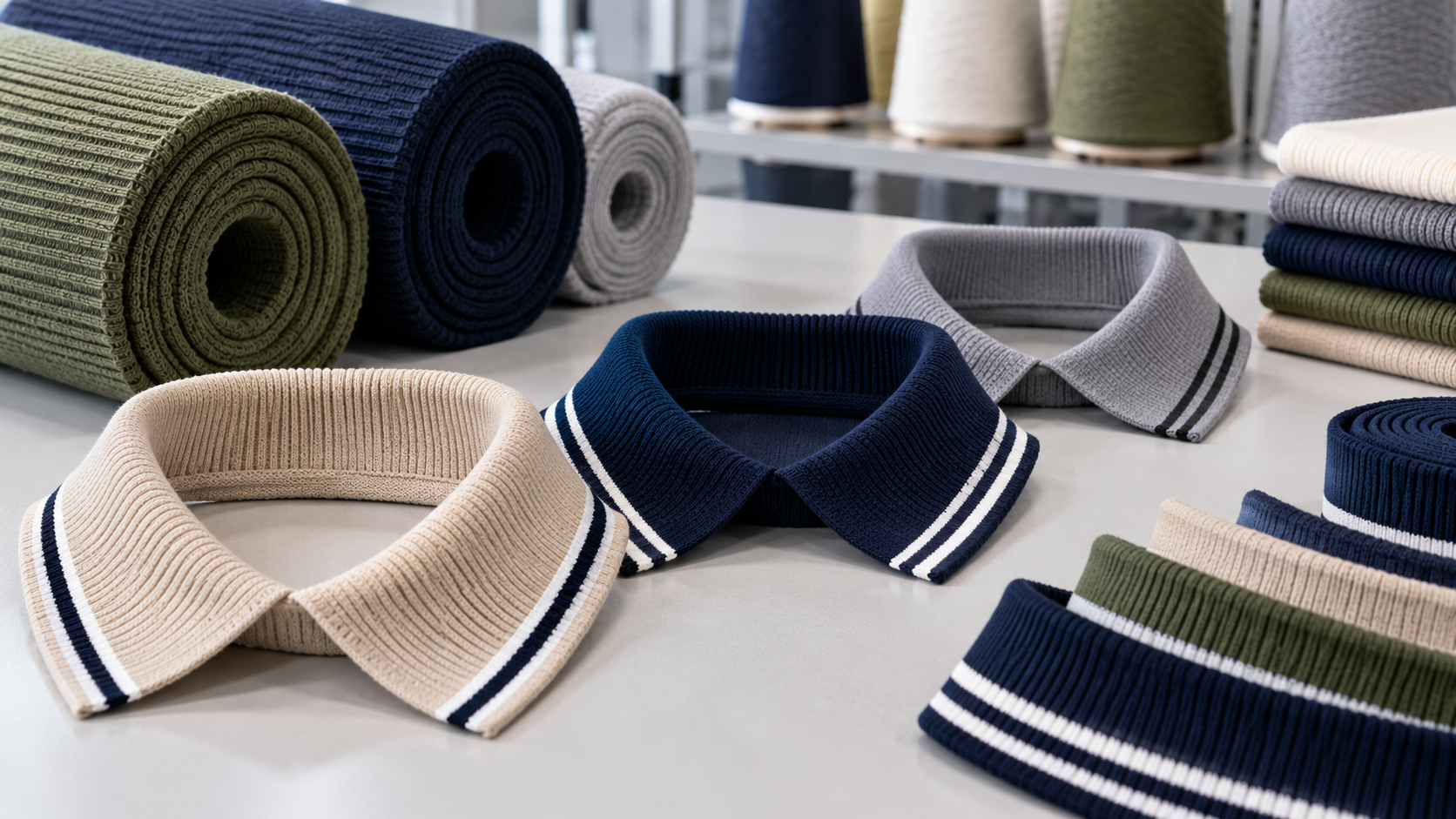
Understanding Collar Rib and Its Role in Knitwear
A Collar Rib is a knitted garment component designed to add structure, flexibility, and a neat finish around the neckline. Its rib construction allows the collar to stretch during wear while helping it return toward its intended shape. Consistent knitting, suitable thickness, and accurate sizing can also improve the fit and appearance of the finished garment.
For knitwear manufacturers, selecting the right collar rib requires attention to yarn quality, rib pattern, dimensions, elasticity, recovery, color, and the garment’s intended use. Evaluating these specifications before production can help achieve better consistency, comfortable fitting, and reliable performance across individual garments and larger production batches.
Understanding the Role of Knitted Neckline Components
SL Hosiery works with knitted garment components for manufacturers involved in knitwear and apparel production. Its production approach considers practical factors such as knitting structure, dimensions, material suitability, elasticity, finishing, customization, and consistency. For a Collar Rib, these details can influence neckline fit, stretch, recovery, appearance, and overall garment finishing.
Understanding the intended garment application helps in selecting suitable specifications for each requirement. SL Hosiery focuses on clear product details, consistent manufacturing, and quality checks to support regular and bulk production. This approach helps manufacturers source components that meet their specific garment requirements with greater consistency and reliability.
Why Collar Rib Matters in Modern Knitwear Manufacturing
The neckline is one of the most noticeable and frequently handled areas of a garment, so its construction can affect both appearance and everyday performance. Proper elasticity supports a comfortable fit, while good shape retention helps the neckline maintain its intended form after repeated stretching. The combination of yarn quality, knitting structure, and accurate dimensions also contributes to consistent comfort and reliable use.
Uniform knitting, clean finishing, and suitable material selection can create a more polished neckline and support better garment durability. These factors are particularly important in regular and bulk production, where consistency across multiple garments directly affects overall product quality. Careful attention to specifications and production checks helps manufacturers achieve a neat, comfortable, and dependable finished result.
Collar Rib Manufacturing Process for Consistent Garment Quality
A controlled production process helps maintain consistency in dimensions, knitting quality, elasticity, and finishing from sample development through bulk manufacturing.
Step 1: Understand the Garment Requirement
The garment type, neckline design, size, color, and intended use are reviewed first. These details help determine the suitable construction and production specifications.
Step 2: Confirm Measurements
Required width, height, thickness, circumference, and other dimensions are finalized. Accurate measurements help ensure proper fitting during garment assembly.
Step 3: Select the Yarn
Yarn is selected according to the required softness, strength, stretch, recovery, appearance, and end application. Material selection can directly affect the finished product's performance.
Step 4: Select the Rib Structure
The rib structure is chosen based on the required elasticity, shape retention, thickness, and appearance. The construction should suit the neckline and overall garment design.
Step 5: Prepare the Production Settings
Knitting settings are adjusted according to the approved measurements, yarn, and structure. Proper machine setup helps maintain stitch consistency during production.
Step 6: Produce a Sample
A sample is developed before bulk manufacturing to verify the selected construction and specifications. This provides an opportunity to identify and correct issues early..
Step 7: Inspect the Sample
The sample is checked for dimensions, stitch uniformity, stretch, recovery, thickness, colour, and finishing. Any required adjustments are made before approval.
Step 8: Start Bulk Production
After the sample is approved, bulk production begins using the confirmed specifications. Monitoring during production helps reduce variations between individual pieces.
Step 9: Perform Quality Inspection
Finished products are inspected against the approved sample and specifications. Checks help identify dimensional differences, knitting defects, colour variation, or finishing issues.
Step 10: Pack and Dispatch
Approved products are packed carefully to protect their shape and finish during handling and transport. The order is then prepared for dispatch according to the agreed requirements.
Why Choose SL Hosiery for Your Knitwear Component Requirements
SL Hosiery follows a practical, production-focused approach to Collar Rib requirements, with attention to how each component fits into the customer's garment manufacturing process. Product specifications such as dimensions, rib construction, knitting consistency, stretch, recovery, color, and finishing are considered based on the intended application. This helps manufacturers identify suitable options while maintaining consistency across different garment requirements.
The company also supports customized production through clear specification-based communication, sample verification, and quality-focused manufacturing practices. By understanding the requirements before production and checking the finished components against agreed specifications, SL Hosiery aims to provide reliable solutions for regular and bulk knitwear production. This focus on application, consistency, and quality control helps manufacturers make more informed sourcing decisions and reduce avoidable variations during production.
Key Advantages and Considerations of Collar Rib
This knitted component can provide useful performance benefits in garment production, including good neckline flexibility, controlled stretch, shape retention, and a clean finished appearance. Different rib constructions and customizable dimensions also make it suitable for a range of knitwear applications, while consistent production practices can help maintain uniformity across larger manufacturing batches.
The final result depends on choosing the right construction and specifications for the intended garment. Yarn selection, elasticity, dimensions, and color matching should be reviewed before production, as variations in these factors can affect fit and appearance. For new or customized requirements, checking a sample before bulk production is a practical way to confirm the expected construction, measurements, and finishing.
Choosing the Right Collar Rib for Better Garment Finishing
Collar Rib can influence several important aspects of a knitted garment, including neckline fit, stretch, recovery, comfort, appearance, and finishing quality. The right choice depends on practical specifications such as yarn type, rib structure, dimensions, thickness, color, elasticity, and the intended garment application.
For manufacturers, consistent production and proper quality checks are important when sourcing knitted components. Clear technical specifications, suitable customization, sample verification, and reliable production practices can help maintain uniform results across larger orders and support better garment quality from production to final finishing.