
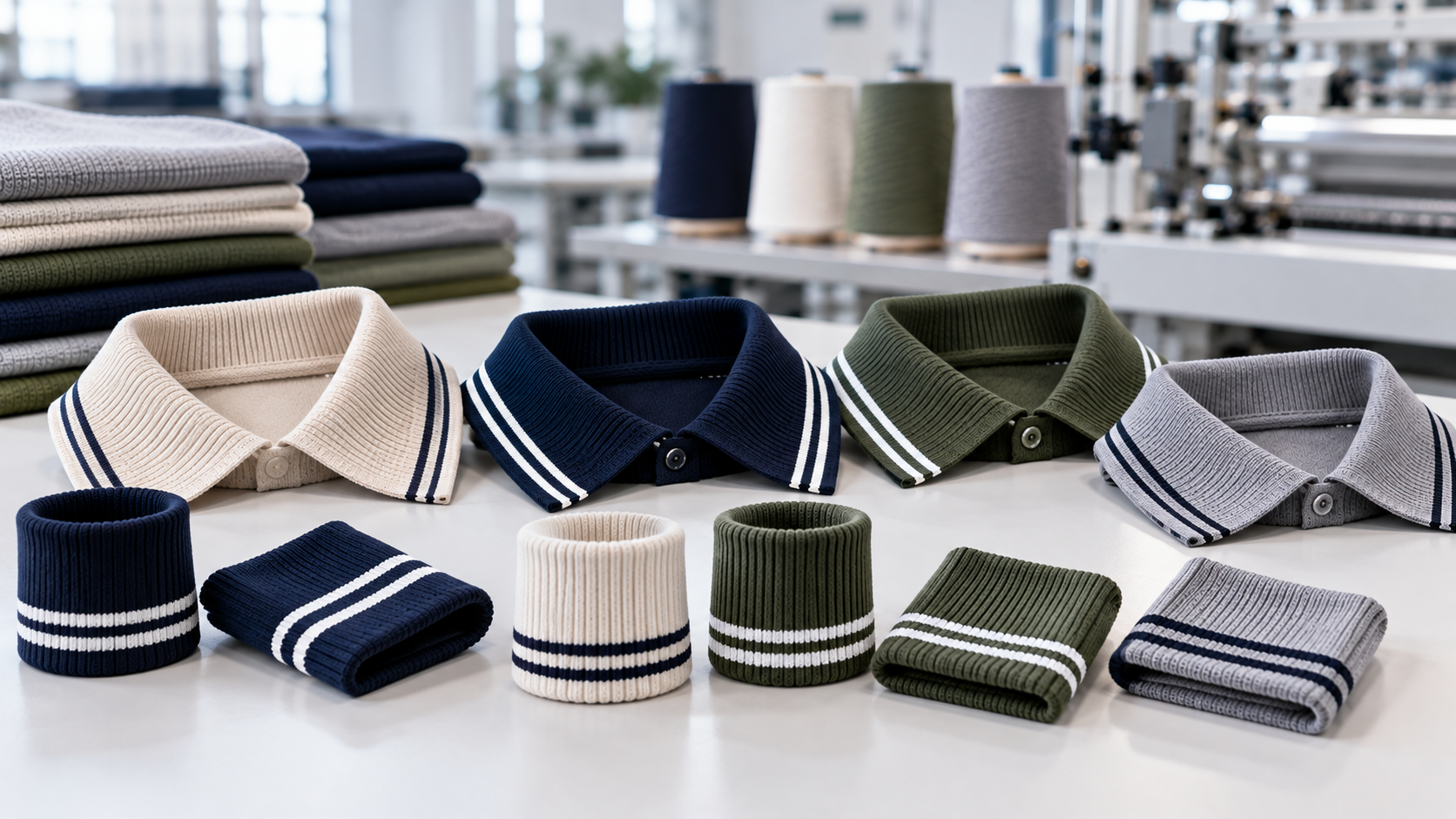
Collar and Handcuff for Modern Knitwear Production
Collar and Handcuff components contribute to the fit, comfort, appearance, and overall finishing of knitted garments. Their quality depends on factors such as accurate dimensions, suitable elasticity, consistent stitch formation, yarn selection, color matching, and proper finishing. Even small variations can affect how the finished garment fits and looks.
Selecting suitable components requires practical consideration of the garment design and production requirements. Manufacturers should evaluate fabric construction, yarn characteristics, stretch recovery, dimensions, color consistency, durability, and finishing quality before production. Proper specifications and quality checks can help maintain uniform results across different garment batches.
Understanding Collar and Handcuff Components
Collars and cuffs are knitted garment components that add structure, comfort, and a finished appearance to apparel. Their design and construction need to match the garment’s fabric, size, stretch requirements, and intended use. A Collar and Handcuff Manufacturer typically considers factors such as stitch structure, dimensions, yarn selection, elasticity, shape retention, and finishing quality when producing these components.
A collar is fitted around the neckline to influence the garment’s fit, shape, and overall styling, while knitted cuffs are attached to sleeve openings to provide a controlled fit and neat finishing. Proper stretch recovery and consistent construction are important for maintaining comfort and appearance during regular garment use.
Why Quality Matters in Knitwear Manufacturing
The quality of Collar and Handcuff components can directly influence the fit, appearance, and finishing of a knitted garment. Important checks include consistent dimensions, suitable elasticity, good stretch recovery, uniform stitch formation, accurate color matching, and clean finishing. Regular quality inspection helps identify uneven edges, loose threads, sizing variations, or other defects before the components are used in finished garments.
A reliable Collar and Handcuff Supplier should be able to maintain consistent specifications across production batches while meeting the garment’s fabric, color, size, and stretch requirements. Manufacturers should also evaluate material quality, construction consistency, finishing standards, production capability, and quality-control practices when selecting a supplier for regular requirements.
Types of Collar and Handcuff Requirements in Knitwear
Different knitwear designs require different collar and cuff constructions based on garment size, fabric structure, stretch, and styling requirements. Ribbed collars and knitted cuffs are commonly selected when elasticity and recovery are important, while contrast or matching components can be used to achieve a coordinated appearance. Custom-sized components may also be produced according to specific garment measurements and design specifications .
A Collar and Handcuff Exporter should be able to support varied requirements with consistent dimensions, suitable yarn selection, accurate color matching, and reliable finishing. Manufacturers should consider product quality, customization capabilities, production consistency, packaging, and supply reliability when selecting components for different knitwear applications.
Step-by-Step Process for Producing Quality Garment Components
A structured production process helps ensure that Collar and Handcuff meet the required measurements, appearance, elasticity, and finishing standards. Careful planning, sample verification, and quality checks can reduce production variations and support consistent results.
Step 1: Define the Garment Requirements
Identify the garment type, neckline, sleeve dimensions, design preferences, fabric structure, and required finishing details .
Step 2: Confirm Measurements
Finalize collar length, width, cuff dimensions, thickness, stretch requirements, and other specifications according to the garment design.
Step 3: Select Yarn and Construction
Choose suitable yarn and knitting construction based on the required texture, elasticity, durability, color, and intended garment use.
Step 4: Develop the Knitting Pattern
Create the required pattern and stitch structure according to the approved measurements, design, gauge, and production specifications.
Step 5: Produce a Sample
Manufacture a trial component to evaluate the fit, dimensions, stitch formation, elasticity, color, and overall appearance before bulk production.
Step 6: Inspect the Sample
Check the sample for measurement accuracy, stitch uniformity, stretch recovery, color matching, edge finishing, and visible defects.
Step 7: Begin Production
After approval, Custom Knitted Collar and HandCuff components can be produced according to the finalized specifications and quality requirements.
Advantages and Considerations of Collar and Handcuff Components
Quality collar and cuff components can provide consistent construction, customizable dimensions, suitable elasticity, and improved garment finishing. The Best Collar and Handcuff Manufacturer in India should be able to maintain reliable production standards while supporting different knitwear designs, sizes, colors, and bulk production requirements .
Before production, manufacturers should confirm measurements, yarn specifications, stretch requirements, color matching, and finishing expectations. Sample approval and regular quality inspection are especially useful for customized designs and larger orders, helping identify variations before they affect the final garment.
SL Hosiery for Reliable Quality and Production Support
SL Hosiery focuses on providing Collar and Handcuff solutions according to the practical requirements of knitwear manufacturers. The approach includes attention to dimensions, knitting construction, stitch consistency, customization, and finishing quality. Requirement-based guidance and sample approval can also help ensure that the selected components match the garment specifications before larger production begins.
The team emphasizes clear communication of measurements, colors, yarn requirements, stretch specifications, and finishing expectations throughout the process. A quality-focused production approach, combined with consistent inspection and support for customized requirements, helps manufacturers manage different knitwear applications while maintaining reliable component quality.
Collar and Handcuff for Better Garment Fit and Comfort
High-quality Collar and Handcuff components can make a noticeable difference to the fit, comfort, appearance, and finishing of knitted garments. Choosing suitable components requires attention to dimensions, knitting construction, elasticity, yarn compatibility, color matching, customization, and quality standards. Proper specifications and sample checks can help manufacturers achieve more consistent results across production batches.
When selecting a Collar and Handcuff Manufacturer, supplier, or exporter, businesses should consider production experience, consistency, customization capabilities, quality-control practices, and supply reliability. Clear communication of garment requirements and dependable production support can help ensure that the finished components meet the expected specifications and perform well in practical applications.