
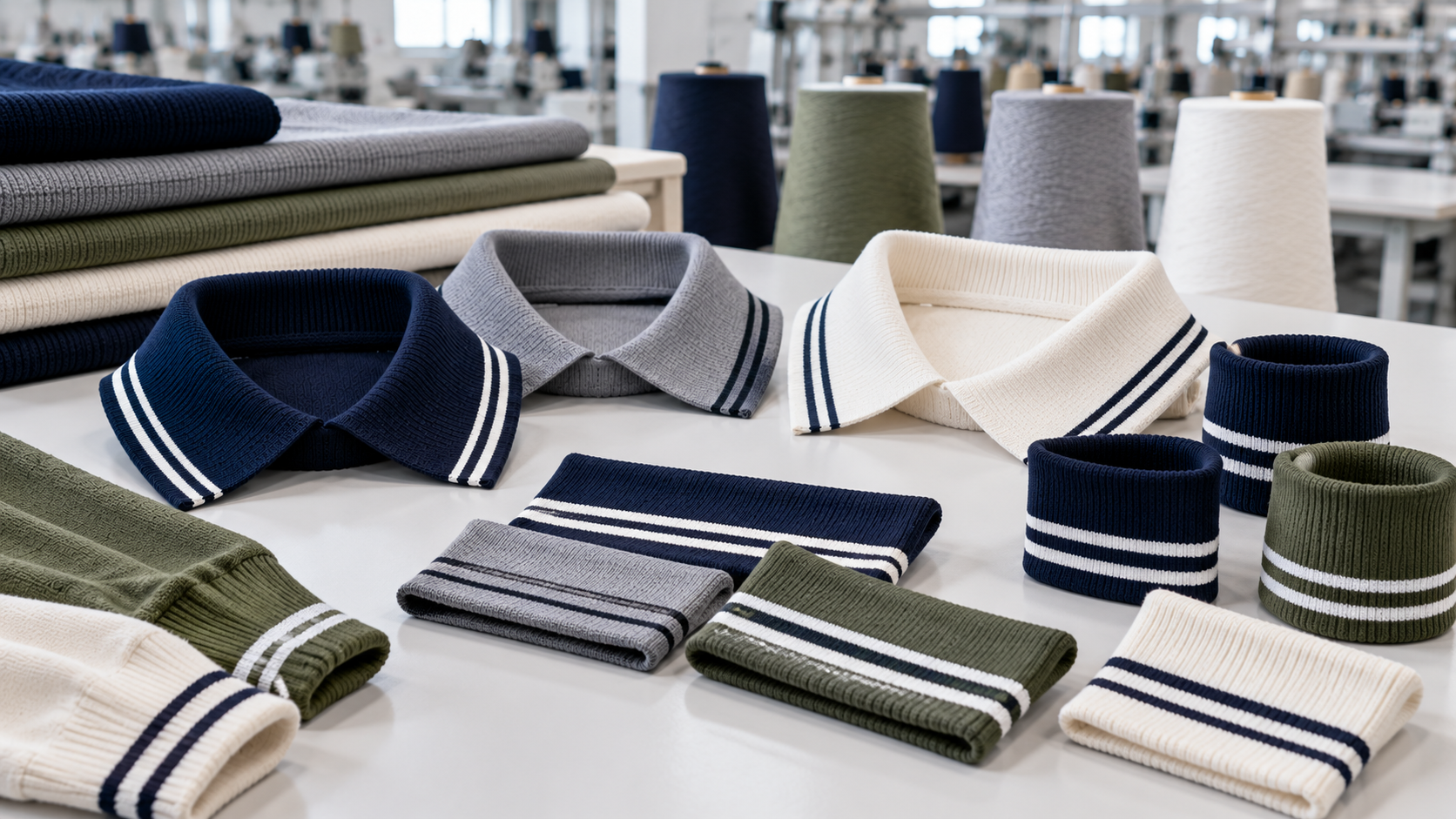
Understanding Collar and Cuff for Modern Garments
Collar and Cuff are important knitted components that contribute to the fit, comfort, appearance, and finishing of many garments. Their performance depends on factors such as stitch consistency, dimensions, stretch, recovery, material quality, and finishing. Even small variations in these details can affect how the garment looks and performs during regular wear.
For knitwear manufacturers, selecting the right components requires attention to the intended garment, yarn characteristics, knitting structure, color requirements, elasticity, and size specifications. Clear production standards, consistent manufacturing, and proper quality checks help achieve uniform results across individual pieces and bulk orders.
Understanding Collar and Cuff Quality and Applications
SL Hosiery works with knitted garment components for businesses involved in knitwear and apparel production. Its focus is on practical manufacturing requirements, with attention to construction, size accuracy, knitting consistency, material selection, and finishing quality. This helps ensure that components are suitable for their intended garment applications
The company also considers customization and production requirements when supporting business orders. Clear specifications, consistent manufacturing practices, and quality checks can help reduce variations during production and make sourcing more dependable for manufacturers handling regular or bulk requirements.
Why Product Quality Matters in Garment Manufacturing
The quality of a Collar and Cuff can have a noticeable effect on garment fitting, appearance, and overall finishing. Accurate dimensions support easier assembly, while consistent stitching creates a cleaner look. Proper elasticity and recovery are also important because these components need to handle repeated stretching during normal wear without losing their intended shape .
Other details such as color coordination and edge finishing contribute to the final presentation of the garment. Consistent color matching helps the components blend with the main fabric, while clean edges reduce visible defects and improve the finished appearance. Checking these specifications during production can help manufacturers maintain uniform quality across different garment batches.
Understanding the Collar and Cuff Manufacturing Process
A consistent production workflow helps maintain quality, accuracy, and repeatability across different orders.
Step 1: Understand the Requirement
Identify the garment application, required dimensions, color, yarn, design, quantity, and performance requirements.
Step 2: Confirm Specifications
Finalize measurements, knitting structure, stretch, recovery, quantity, and finishing details before production begins.
Step 3: Select Suitable Material
Choose yarn and related materials according to the required feel, strength, elasticity, appearance, and end use.
Step 4: Prepare the Knitting Pattern
Set the required knitting structure, measurements, and pattern details based on the approved specifications.
Step 5: Develop a Sample
Produce a sample to check dimensions, knitting quality, color, stretch, recovery, and finishing before moving to bulk production.
Why Choose SL Hosiery for Your Garment Components
SL Hosiery takes a practical, specification-focused approach to Collar and Cuff manufacturing, considering factors such as garment application, dimensions, knitting structure, stretch, recovery, color, and finishing. This helps manufacturers select components that fit their actual production needs rather than relying on standard specifications that may not suit every garment .
The company also supports customized requirements through clear specification-based communication, sample evaluation, and attention to knitting consistency. By focusing on product details, quality checks, and application requirements, SL Hosiery aims to provide dependable components for regular and bulk knitwear production while helping manufacturers maintain consistent garment quality.
Collar and Cuff Benefits for Comfortable and Durable Garments
High-quality garment components can contribute to better fit, appearance, and production efficiency. Accurate dimensions and suitable elasticity support proper fitting around the neckline and sleeves, while consistent knitting and clean finishing create a more refined look. Good construction also helps the components retain their intended shape during normal wear and repeated use .
For manufacturers, consistent specifications can reduce variations between production batches and make garment assembly more straightforward. Different colors, patterns, structures, and dimensions can also be developed to suit specific designs, while accurate sizing and alignment help minimize avoidable fitting issues during production. These factors together support reliable garment quality and a more consistent finished product.
Collar and Cuff for Consistent Quality and Better Garment Finishing
A well-manufactured Collar and Cuff can make a noticeable difference to garment fit, comfort, appearance, and overall finishing. Consistent results depend on practical quality factors such as yarn selection, knitting structure, accurate dimensions, suitable elasticity, color matching, shape recovery, and proper inspection. Paying attention to these details helps reduce variation and supports a more uniform finished garment across different production batches.
For knitwear manufacturers, selecting a suitable sourcing partner involves more than comparing product prices. Technical understanding, clearly defined specifications, sample verification, customization support, production consistency, and quality checks all contribute to a dependable supply process. A supplier that understands the intended garment application can help manufacturers make better component decisions and maintain consistent standards throughout regular or bulk production.